
For leaseholders in an affected building, the wait for cladding remediation to begin can feel endless. Years of uncertainty – unable to sell, unable to remortgage, living with a fire safety risk they didn’t create and can’t resolve themselves. By the time scaffolding finally goes up, most residents have been through more than most building owners realise.
That context matters enormously for how a remediation programme should be run. The buildings that get it right understand that the technical challenge. That removing unsafe cladding and replacing it with compliant materials is only half the job. The other half is human.
What We See Go Wrong
Most remediation programmes that run into serious difficulty do not fail on the engineering. They fail on the gap between what residents were told and what actually happened.
A programme announced with a six-month completion date that runs to eighteen months, with no substantive communication in between, does not just create frustration – it destroys the trust that building owners and managing agents will need long after the scaffold comes down. Residents who feel ignored during the process have legitimate grievances. They also have legal rights, and increasingly, they know how to use them.
The irony is that the disruption caused by poor communication is usually greater than the disruption caused by the works themselves. Noise, scaffold, restricted access – residents can tolerate all of these if they know what is coming and why. What they cannot tolerate, and should not be asked to, is uncertainty compounded by silence.
Acknowledge What Residents Have Already Been Through
Before a project manager thinks about programme sequencing or contractor briefings, it is worth spending a moment on what the people living in the building have actually experienced.
For many leaseholders, the cladding crisis has not been an abstract policy issue. It has meant years of being unable to sell a home they needed to move from. Mortgage applications refused or withdrawn. And service charge demands they could not challenge and interim safety measures – waking watch, temporary alarm systems – they were asked to fund while waiting for a permanent fix that kept being deferred.
By the time works begin, the relationship between residents and the people managing their building may already be strained. A remediation programme managed without empathy for that history will not repair it. One managed with genuine transparency and respect for what residents have been through can.
That is not a soft consideration. It is a practical one. Engaged, informed residents cooperate with access requests. They tolerate disruption more readily when they understand its purpose. They are less likely to raise formal complaints that consume programme management time. And they are more likely to trust the outcome – including the updated EWS1 — when it arrives.
Honesty About Timelines Is Non-Negotiable
Of all the things that go wrong in remediation programmes, timeline management is the most consistent and the most damaging.
Cladding programmes are routinely longer than initial estimates. This is not a failure of competence – it reflects the genuine complexity of working at height on occupied buildings. Material procurement lead times. Weather windows that close. Defects discovered when cladding is removed that were not visible from the outside. Inspections and certifications that take longer than optimistic programmes allow. These are features of the environment, not exceptions to it.
The right response to this reality is to build it into the programme from the start and communicate it honestly. A programme communicated as “approximately twelve to eighteen months, with contingency built in for discovery works and weather” is more credible and more manageable than one promised at nine months and delivered at twenty. When delays happen – and in programmes of this scale, they do – residents who were given a realistic range from the outset are in a far better position than those who were given a deadline that has now passed.
When the programme does slip, communicate it promptly, explain what happened, and provide a revised timeline. A delayed update is almost always worse than a difficult one. Residents who discover a delay because the scaffold did not come down when they expected it, rather than because someone told them, draw their own conclusions – and they are usually uncharitable.
Communication Is a Programme Deliverable, Not an Add-On
In too many programmes, resident communications are treated as an administrative task – something to be done when there is something to announce, handled by whoever has capacity. That approach produces exactly the inconsistency and silence that erodes trust.
Resident communication should be treated as a programme deliverable with the same rigour as any other workstream. It should have a plan, an owner, a cadence, and a quality standard. That means:
A named individual – not a generic contact address – who residents can reach with questions and who is expected to respond within a defined timeframe. Residents in difficult situations do not want a helpdesk. They want to know that a real person is accountable for their building.
Regular updates at agreed intervals, regardless of whether there is dramatic news to share. A fortnightly programme update that says “scaffold installation proceeding as planned, cladding removal commences on the north elevation next week” is not exciting – but it tells residents that someone is across the programme and thinks they deserve to know.
Honest communication when the programme hits difficulty. This is the hardest part, and the most important. The instinct to defer a difficult update until there is better news to accompany it is understandable and almost always wrong. Residents who are kept informed of challenges as they arise are partners in managing them. Residents who find out retrospectively are critics.
The Practical Realities of Working on Occupied Buildings
The logistics of a remediation programme on an occupied building require discipline that standard construction management does not always impose.
Scaffold changes access. Residents need to know when their entrance will be covered, when parking will be restricted, when refuse collection routes will change – and they need to know before it happens, not on the morning. Every access implication should be mapped, communicated in advance, and managed on the day by someone whose job it is to do so.
Working hours matter more than they do on a vacant site. Residents who work from home, have young children, work night shifts, or are elderly are disproportionately affected by construction noise. Agreeing working hours with residents before works start, and holding contractors to those hours, is basic respect. Allowing contractors to make their own decisions about when to work is a programme management failure.
Defect discovery is a near-certainty on any cladding programme. Removing cladding from a building that has not been opened since construction frequently reveals missing cavity barriers, compromised fire stopping, concealed water damage, or materials that were not identified in the original assessment. Residents should understand from the outset that this is a normal feature of remediation programmes – not a sign that something has gone wrong – and that there is a process for managing it. When significant discoveries are made, tell residents what was found and what it means for the programme.
Documentation Is the Foundation for What Comes Next
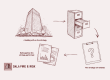
One of the least visible but most consequential aspects of programme management is the documentation produced during the works. The inspection records, material specifications, installation certificates, and photographic evidence gathered throughout the programme are not paperwork for their own sake – they are the evidence base for the final EWS1 certificate and the long-term fire safety record of the building.
For buildings in scope of the Building Safety Act 2022, the Golden Thread – the requirement to maintain accurate, up-to-date information about the building throughout its lifecycle – is a legal obligation. Every change to the external wall system should be captured as part of that record.
Programmes that treat documentation as something to be compiled at the end spend significant time and cost reconstructing evidence that should have been captured as the works progressed. Programmes that build documentation into their management discipline produce the evidence trail alongside the physical works — which means the final EWS1 process is completion verification, not an investigation.
What Good Looks Like
A well-run cladding remediation programme looks like this: residents who knew what was happening before it happened, who received honest updates throughout, who were told promptly when things changed and why, and who emerge from the process with their relationship with the building’s management intact – and in some cases, improved.
It also looks like a clean, documented evidence trail, a certifiable final position, and a building whose fire safety record reflects the quality of the work done.
That is achievable on every programme. It requires planning, discipline, and a genuine commitment to treating the people living in the building as participants in the process rather than an inconvenience to be managed around.
How DALA Projects Approaches This
DALA Projects provides lead consultancy and project delivery for cladding remediation programmes on occupied residential buildings. Every programme we manage is built around the principles in this article – realistic programming, structured resident engagement from day one, honest timeline management, and documentation discipline throughout.
We work alongside our partner Archway FM where funding applications and coordination are part of the picture. This gives our clients a connected team across the full remediation journey, from FRAEW through to final EWS1 certification.
If you are planning a remediation programme, or managing one that has run into difficulty, we can provide a clear-eyed assessment of where things stand and a practical plan for moving forward.
Simply call us on 02381 551000, email us at enquiries@thedala.group or visit our contact page here.
References and Further Reading
- Building Safety Act 2022 — GOV.UK guidance — resident engagement duties, Accountable Person obligations, and the legal framework for higher-risk buildings
- Golden Thread of Information — GOV.UK — guidance on maintaining building information records throughout a building’s lifecycle
- Cladding Safety Scheme — GOV.UK — funding eligibility, application process, and reporting obligations
- Leaseholder Protections under the Building Safety Act — GOV.UK — statutory rights of qualifying leaseholders regarding remediation costs
- HSE Construction Design and Management Regulations 2015 — legal framework for health and safety management on construction projects
- Archway FM — specialist cladding remediation consultancy; funding applications, project coordination, and EWS1 certification management