A fire risk assessment that identifies serious findings is not a problem, it’s the system working. What you do with those findings determines whether you are legally protected or legally exposed. This article sets out what the findings mean, what the law requires, and what a clear path forward looks like.
Understanding the Risk Rating
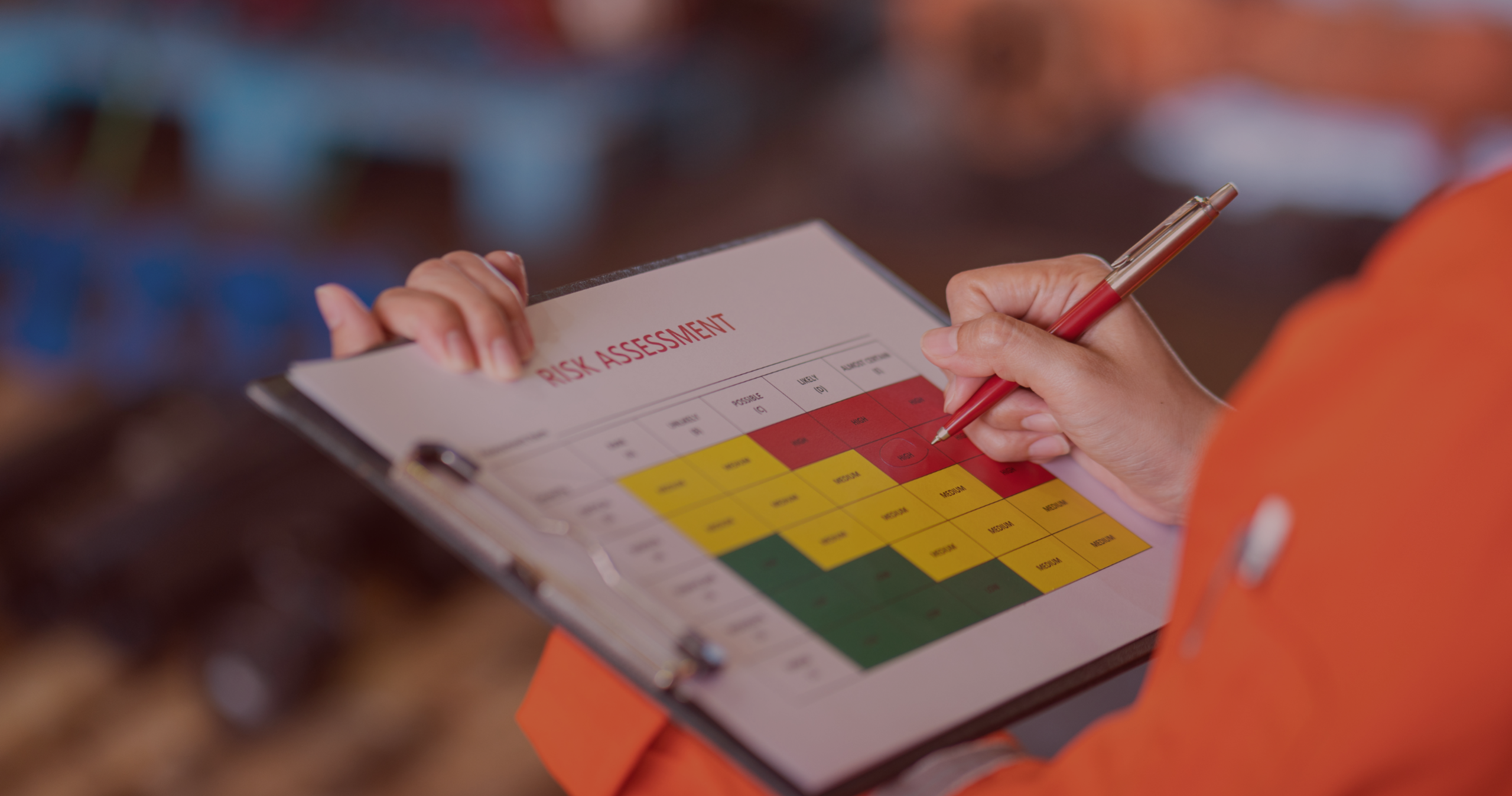
Not every finding in a fire risk assessment carries the same weight. A competent assessor will risk-rate each observation according to the likelihood and consequence of harm. That rating then determines the timescale within which action is required.
The framework used by most qualified assessors reflects the Regulatory Reform (Fire Safety) Order 2005 requirement to reduce risk to “as low as reasonably practicable.” In practice, that translates to four categories:
Immediate: A finding that presents an urgent and unacceptable risk to life. Action is required now, or the building (or affected area) should not be occupied until it is resolved. These findings are rare but unambiguous: a blocked or unusable means of escape, a compromised fire door on a high-risk route, or a detection system that has failed entirely.
High: A significant finding that materially increases the risk to occupants. Action is required within a short timeframe, typically four to twelve weeks, depending on the specific risk and building context. These findings are serious and should not be deferred.
Medium: A deficiency that requires attention but does not present an immediate or near-term life safety risk. A reasonable timeframe for action (typically three to six months) is appropriate, subject to the specific circumstances.
Low: An observation or minor deficiency that should be recorded and addressed during planned maintenance or the next inspection cycle. These findings are informational and should not be ignored, but they do not require urgent resource allocation.
The risk rating is a professional judgement, not a formula. Two buildings with superficially similar findings may carry different risk ratings depending on occupancy, use, evacuation strategy, and compensatory measures. The context of the finding matters as much as the finding itself.
What the Law Requires
The Regulatory Reform (Fire Safety) Order 2005 places a legal duty on the Responsible Person to take the general fire precautions necessary to ensure, so far as is reasonably practicable, the safety of relevant persons. That duty is not discharged by commissioning a fire risk assessment. It is discharged by acting on it.
Receiving a fire risk assessment containing serious findings and taking no action is not a defensible position. It is evidence that the Responsible Person was aware of a risk and chose not to address it.
The enforcement framework reflects this. The Fire Safety (England) Regulations 2022 and the underlying FSO provide Fire and Rescue Authorities with three primary enforcement tools:
Alteration Notice: issued where the FRA believes the risk to relevant persons is likely to increase significantly if a proposed change is made to the building.
Enforcement Notice: issued where the FRA believes the Responsible Person is failing to comply with their duties. The notice specifies what must be done and by when.
Prohibition Notice: issued where the FRA believes the risk to relevant persons is so serious that use of the premises should be prohibited or restricted until remedial action is taken. This is the most serious instrument and can result in immediate closure of premises or evacuation of occupants.
For higher-risk buildings in scope of the Building Safety Act 2022, (those 18 metres or above, or seven storeys or more, with at least two residential units), the consequences of failing to act are more severe still. The Accountable Person has legal duties under the Building Safety Act that sit alongside, and in some areas go beyond, the FSO. Significant findings in those buildings may need to be reflected in the Safety Case.
A Practical Path Forward
Receiving a fire risk assessment with serious findings is the beginning of a process, not the end of one. The path forward is straightforward, even when the findings are not.
Act on immediate findings without delay. If the assessment has identified anything rated as immediate, that action cannot wait for a programme to be designed. Engage the necessary trades or specialists, implement interim measures where required, and document what has been done.
Commission remediation for high-priority findings. High-rated findings require a clear programme: what needs to be done, who will do it, and by when. Where specialist contractors are required (fire door replacement, compartmentation works, alarm upgrades), begin procurement immediately. The timescale on a high finding is measured in weeks, not months.
Document everything. The Responsible Person’s legal position is only as strong as the evidence that supports it. Every action taken, every instruction given, every contractor engaged, and every completed works sign-off should be retained as part of the fire safety management record. This is the audit trail that demonstrates compliance if it is ever tested.
Build the ongoing review into the management cycle. A fire risk assessment is a point-in-time assessment of a building as it exists on that day. Findings that are resolved should be recorded as resolved. New findings that arise from building alterations, changes in use, or deterioration of existing measures should be captured in a review. The Fire Safety Order requires the assessment to be reviewed regularly and whenever there is reason to believe it is no longer valid.
How DALA Supports You Through the Process
Receiving a list of findings with timescales attached is one thing. Understanding what they mean for your specific building, how to prioritise competing demands, and how to demonstrate a credible compliance position is something else entirely.
DALA Fire & Risk works with clients beyond the delivery of the assessment itself. For Responsible Persons who want support navigating the remediation process, we provide:
Plain-English briefings on findings. We translate the technical language of the assessment into clear priorities: what the finding means, why it matters, and what the practical resolution looks like. This is particularly valuable for building owners and managing agents who are not specialists in fire engineering but need to make informed decisions.
Prioritisation support. Where a building has multiple findings across different risk categories, we help clients build a logical remediation sequence. One that addresses life safety risk first, makes efficient use of contractor mobilisation, and produces a defensible audit trail.
Contractor specification guidance. The specification determines whether remediation actually works. We tell you what any contractor carrying out fire door, compartmentation, or alarm works needs to deliver. This means that the works resolve the findings, not just create the appearance of compliance.
Progress review and reassessment. Once remediation is complete, we can review the works and update the fire risk assessment to reflect the current condition of the building. This closes the loop: the finding was identified, it was resolved, and the resolution is documented.
This support is not a project management service. It is consultative, expert guidance that helps clients make better decisions and build a stronger compliance position. Clients who want full project oversight have that option too.
When You Need More Than an Action Plan
For buildings with complex or large-scale remediation requirements (multiple fire doors, significant compartmentation works, alarm system replacement, or works that need to be coordinated across an occupied residential building), the level of programme management involved goes beyond fire engineering advice.
DALA Projects provides lead consultancy and project delivery for remediation works of this kind. Where a fire risk assessment has identified a significant programme of works, the team can take on scope definition, contractor procurement, programme management, and completion verification. All while providing a single point of accountability for the entire remediation programme.
This is not a mandatory part of the process. Many clients resolve findings through their own contractor relationships with technical support from DALA Fire & Risk alone. But for those managing complex residential portfolios or facing a significant programme of remediation, having a specialist project delivery team with direct knowledge of the fire engineering requirements is a material advantage.
The Position You Want to Be In
The Responsible Person who acts promptly on a fire risk assessment, documents their actions, and maintains a managed approach to fire safety is in a defensible position. The Responsible Person who receives a serious finding and does nothing is not.
A fire risk assessment that surfaces serious issues is doing exactly what it is supposed to do. The question is not whether findings are uncomfortable; it’s whether you act on them.
Talk to DALA Fire & Risk
DALA Fire & Risk carries out fire risk assessments across commercial, residential, and mixed-use buildings in England and Wales. Every assessment is conducted by qualified assessors, rated clearly, and supported by a structured action plan.
If your building has existing findings you need to work through, or if you need a new assessment, we can help.
Call us on 02381 551000 or email enquiries@thedala.group.
References and Further Reading
- Regulatory Reform (Fire Safety) Order 2005 — primary fire safety legislation, Responsible Person duties, and the requirement to act on fire risk assessment findings.
- Guide for persons with duties under fire safety legislation — GOV.UK plain-English guide to who is the Responsible Person and what is required of them.
- Fire Safety (England) Regulations 2022 — additional duties for Responsible Persons in multi-occupied residential buildings above 11 metres, including information provision and building plan requirements.
- Building Safety Act 2022 — GOV.UK guidance — higher-risk buildings regime, Accountable Person duties, and Safety Case obligations.
- HSE Guidance on Fire Risk Assessments — HSE overview of fire risk assessment obligations and the regulatory framework.
- NFCC Fire Risk Assessment Competency Framework — National Fire Chiefs Council guidance on assessor competence.